

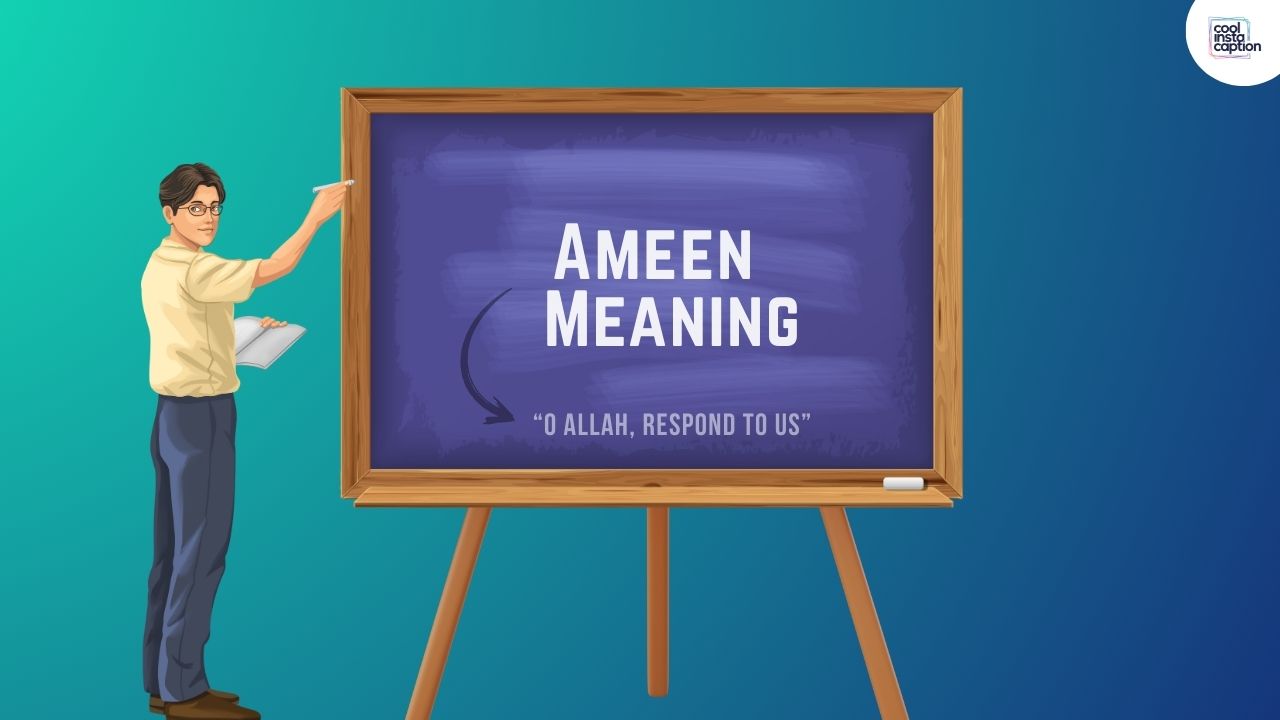
Have you ever felt a deep, silent longing in your heart while making a Dua, hoping for a divine “yes”? The word Ameen is that bridge between your soul’s desire and Allah’s infinite mercy, acting as a seal of faith.
Understanding the Ameen Meaning helps you connect more deeply with your Creator. This simple yet profound word transforms your supplications into a powerful collective testimony, inviting the angels to join your plea for acceptance.
The Powerful of Ameen Meaning in Arabic
The term Ameen carries immense spiritual weight, signifying a person’s total reliance on the Almighty. It is not just a word; it is a declaration of faith and a testimony that one believes in the fulfillment of their supplication.
- Seal of Dua: It acts as a finishing touch to any prayer.
- Divine Approval: It seeks the acceptance of the Lord of the Worlds.
- Spiritual Certainty: It reflects Tawakkul (trust) in Allah’s timing.
- Prophetic Tradition: It follows the Sunnah of the Prophet (PBUH).
- Global Unity: Used by millions of Muslims across different languages.
| Aspect | Arabic Significance |
| Root | A-M-N (Security/Trust) |
| Spiritual State | Complete Submission |
| Effect | Tranquility of the Heart |
What does Ameen mean in Islam?
In Islamic theology, saying this word means “O Allah, respond to us” or “So be it.” It is the verbalization of hope, signaling that the believer is waiting for divine intervention. When a worshipper utters it, they are essentially asking Allah to grant the blessings mentioned in the Dua.
- Response to Fatiha: Recited after the opening chapter of the Quran.
- Angelic Echo: The angels say it alongside the believers.
- Forgiveness: Syncing with angels leads to the forgiveness of sins.
- Congregational Bond: It creates a sense of unity in the Masjid.
- Heart’s Affirmation: It confirms the sincerity of the supplicant.
The Meaning of “Ameen” in Arabic
The Ameen Meaning is rooted in the concept of “faith” and “security.” Linguistically, it belongs to a category of words known as Ism Fi’l, which functions as a verb meaning “Grant our prayer.” It is a word of truthfulness and constancy that has remained unchanged for centuries.
- A-M-N Root: Same root as Iman (Faith) and Amanah (Trust).
- Divine Attribute: Related to Al-Mu’min (The Giver of Peace).
- Stability: Implies a firm and unshakeable belief.
- Honesty: Reflects the character of one who is trustworthy.
- Consistency: It is used identically in various semitic languages.
Linguistic Root and Grammatical Usage
The root word is Amana, which signifies being in a state of safety or being trustworthy. In grammar, it is an imperative noun, used to invoke a response. It is unique because it doesn’t change based on the gender or number of people speaking; it remains a universal cry of the ummah.
- Ism Fi’l Amr: Functioning as a command to “respond.”
- Vowel Markings: Usually pronounced with a long ‘A’.
- Non-Quranic Word: It is not part of the revelation text but a Sunnah addition.
- Universal Sound: Phonetically similar across Hebrew and Aramaic.
- Semitic Heritage: Connects the Abrahamic faiths through a shared lexicon.
Ameen meaning in prayer
During Salah, particularly after the Imam finishes Surah Al-Fatiha, the congregation says it aloud or silently. This practice is a Sunnah Mu’akkadah (emphasized tradition). It marks the transition from the praise of Allah to the personal or communal supplication for guidance on the Straight Path.
- Sirri Prayers: Recited silently in Dhuhr and Asr.
- Jahri Prayers: Recited aloud in Fajr, Maghrib, and Isha.
- Synchronization: Important to say it exactly with the Imam.
- Spiritual Shield: Protects the prayer from distractions.
- Finality: Completes the worship ritual of the opening section.
Ameen meaning in Quran
While the word itself does not appear as part of the verses of the Quran, its concept is deeply embedded in the revelation. It is the requested response to the Al-Fatiha, which is the heart of the Book. The Prophet Muhammad (PBUH) taught us to conclude the recalled verses of prayer with this powerful affirmation.
- Contextual Necessity: Necessary to complete the petition of the Fatiha.
- Hadith Confirmation: Its usage is verified through Sahih Bukhari.
- Divine Guidance: It is a plea for the “Hidayah” mentioned in the verses.
- Protection: Used to seek refuge from the “path of those who earn anger.”
- Instruction: Taught by Jibril (AS) to the Messenger.
Ameen meaning in Christianity
In the Christian tradition, “Amen” is used similarly to conclude prayers, hymns, and scripture readings. It translates to “Truly” or “Verily.” It serves as a formal affirmation of the truth of what has been said, showing the shared Semitic and Abrahamic roots between the two faiths.
| Feature | Islamic Ameen | Christian Amen |
| Translation | O Allah, respond | Verily / So be it |
| Usage | After Dua/Fatiha | End of Prayer/Hymn |
| Root | Arabic (A-M-N) | Hebrew (A-M-N) |
Biblical Use: Often used by Jesus (Isa AS) to emphasize truth.- Liturgy: A standard part of the church service.
- Solemnity: Adds a sense of gravity to the religious rite.
- Agreement: Used by the congregation to agree with the preacher.
- Declaration: A statement of “Yes, I believe.”
Ameen meaning Arabic
The Arabic Ameen Meaning is multifaceted, extending beyond just prayer. It implies a state of being faithful and reliable. When someone says it, they are putting their full sincerity into the words spoken before it, creating a spiritual contract between the slave and the Creator.
- Firmness: Like a building with a solid foundation.
- Truth: Opposed to falsehood or doubt.
- Security: Providing a sense of peace to the soul.
- Trust: Entrusting the outcome to Allah’s Will.
- Faith: A direct derivative of the word for belief.
Summa Ameen meaning
“Summa Ameen” is an intensified version often used in supplications, meaning “Then, Ameen” or “Again, Ameen.” It is used to emphasize the longing for a response. Believers use it when they are particularly moved by a Dua or when asking for something of great importance, like Jannah.
- Emphasis: Adds a layer of urgency to the request.
- Repetition: A Sunnah practice of repeating Duas three times.
- Deep Desire: Shows the servant’s desperation for mercy.
- Formal Duas: Commonly used in long, emotional Qunut prayers.
- Closing: Serves as a definitive end to a long list of requests.
Al Ameen meaning
“Al-Ameen” was the famous title given to the Prophet Muhammad (PBUH) even before his Prophethood. It means “The Trustworthy” or “The Honest.” This highlights that the root of the word is tied to the highest level of integrity and moral character in human history.
- Prophetic Title: Recognized by the Quraish for his honesty.
- Reliability: Someone who never breaks a promise.
- Safekeeping: People trusted him with their Amanah (possessions).
- Character: The gold standard of Islamic ethics.
- Divine Choice: Why he was chosen to deliver the Message.
Ameen meaning in English
In English, the Ameen Meaning is most accurately captured by phrases like “May it be so” or “Please accept my prayer.” While “Amen” is the standard English spelling, Muslims prefer “Ameen” to reflect the specific Arabic phonetics and the depth of the Islamic context behind the word.
- Agreement: “I agree with this prayer.”
- Hope: “I hope Allah answers this.”
- Confirmation: “This is the truth.”
- Support: “I stand by these words.”
- Translation: Literally “Accept” or “Respond.”
Ameen or Amen
The difference between “Ameen” and “Amen” is primarily linguistic and cultural rather than spiritual. “Ameen” is the transliteration of the Arabic pronunciation, whereas “Amen” is the Hebrew and English version. Both serve the same purpose: a solemn affirmation of faith and a request for a divine answer.
| Aspect | Ameen | Amen |
| Language | Arabic | Hebrew/English |
| Vowel | Long ‘ee’ sound | Long ‘ay’ or ‘ah’ |
| Context | Islamic/Quranic | Christian/Jewish |
Phonetics: Arabic uses a clear ‘m’ and ‘n’ with a long ‘e’.- Spelling: Varies based on regional transliteration.
- Theology: Identical in meaning across all monotheistic paths.
- Universalism: One of the few words understood globally.
- Respect: Using “Ameen” respects the original Prophetic pronunciation.
Examples of “Ameen” in Arabic Sentences
In daily life, the word is used in various social and religious contexts. It is the most common response to any good wish or invocation. Whether in a text message or a face-to-face conversation, it bridges the gap between a wish and a blessing.
- Dua for Health: “May Allah heal you.” Response: “Ameen.”
- Travel Dua: “May you have a safe journey.” Response: “Ameen.”
- Marriage Wish: “May Allah bless your union.” Response: “Ameen.”
- Success: “May you pass your exams.” Response: “Ameen.”
- General Well-being: “May Allah protect your family.” Response: “Ameen.”
Real Chat Example:
User A: “I hope you have a blessed Friday and all your worries are removed.”
User B: “Ameen, and the same to you! Thank you for the kind words.”
Cultural or Quranic Significance of “Ameen”
The cultural significance of saying it lies in the communal nature of Islam. It turns a solitary prayer into a shared experience. When a whole congregation says it together, the sound echoes the strength of the Ummah and their collective submission to the will of Allah.
- Spiritual Anchor: It keeps the believer grounded in faith.
- Community Sound: The “roar” of Ameen in a mosque is iconic.
- Psychological Peace: Ending a prayer with it brings closure.
- Tradition: Passed down from the Sahaba (companions).
- Identity: A verbal marker of being a believer.
1. Common Misunderstandings or Mistakes
Many people use the word without knowing its proper etiquette or its linguistic boundaries. It is often treated as a magical word, but its power lies in the sincerity of the heart. Understanding these mistakes helps in performing Ibadah (worship) correctly and with more focus.
- Meaningless Repetition: Saying it without thinking.
- Wrong Context: Using it for things that aren’t supplications.
- Speed: Rushing the word during Salah.
- Volume Issues: Being excessively loud to the point of distraction.
- Ignoring the Imam: Not timing it with the leader of the prayer.
2. Incorrect Pronunciation:
Pronunciation matters in Arabic because changing a vowel can change the meaning. The word should have a long ‘A’ (madd). If pronounced with a short ‘A’, it might lose its specific supplicatory meaning. Learning the correct Tajweed for even simple words like this is a sign of respect for the language of the Quran.
- Lengthening the Alif: It should be Aa-meen.
- The ‘M’ Sound: Should be clear, not nasalized.
- The ‘N’ Sound: A soft stop at the end.
- Common Error: Pronouncing it as ‘Amin’ (which means “safe”).
- Correction: Listen to Qaris to get the flow right.
3. Improper Timing in Prayer:
One of the most common mistakes in congregational prayer is saying it before the Imam. The Prophet (PBUH) instructed us to wait until the Imam begins to say it. This synchronization is vital because it is at that exact moment that the angels also say it, leading to the forgiveness of the person’s past sins.
- Pre-empting the Imam: A sign of haste and lack of discipline.
- Lagging Behind: Missing the window of angelic agreement.
- Finding the Sweet Spot: Starting just as the Imam’s ‘n’ in Walad-daalleen ends.
- Unity: The goal is a single, unified voice.
- Hadith Guidance: Follow the leader to ensure acceptance.
4. Believing It Is Part of Surah Al-Fatiha:
A frequent misconception among new Muslims or children is that the word is actually a verse of the Quran. It is not. It is an “extracurricular” Sunnah act. This distinction is important for the preservation of the Quranic text, ensuring that nothing is added to the revelation itself.
- Separation: Keep a tiny pause between the verse and the word.
- Textual Integrity: It is never written in the Mus-haf.
- Status: It is a recommended sunnah, not an obligatory verse.
- Knowledge: Knowing the difference increases the quality of prayer.
- Teaching: Correcting others gently about this fact.
5. Disputes Over Volume:
In different Madhabs (schools of thought), there are varying opinions on whether to say it loudly or silently. For example, the Hanafi school usually recites it silently, while the Shafi’i and Hanbali schools recite it aloud. These are valid differences in fiqh and should not be a cause for division.
| School of Thought | Volume Level | Basis |
| Hanafi | Silent | Preference for quiet Dua |
| Shafi’i | Aloud | Based on specific Hadith |
| Hanbali | Aloud | Sunnah of the Sahaba |
| Maliki | Both/Silent | Varies by region |
Tolerance: Respecting the practice of the Masjid you are in.- Intent: The heart’s sincerity is more important than the volume.
- Harmony: Avoiding arguments over minor fiqh issues.
- Focus: The goal is to reach Allah, not to be heard by men.
- Flexibility: Adapting based on the Imam’s leading.
When to say Allahumma Ameen?
You should say Allahumma Ameen when you are making a personal Dua or when you hear someone else making a heartfelt prayer. “Allahumma” means “O Allah,” so the phrase translates to “O Allah, accept this.” It is particularly powerful during times of distress or when seeking forgiveness.
- After Personal Dua: To seal your own supplications.
- Hearing a Sermon: During the Friday Khutbah.
- Comforting Others: When someone expresses a hope or fear.
- End of Gatherings: As a collective closing prayer.
- Social Media: Responding to prayer requests online.
Importance of Saying Ameen After Dua
The Ameen Meaning finds its greatest application after a Dua. It is the moment where the believer lets go of their worries and hands them over to Allah. It signifies the end of the “asking” phase and the beginning of the “trusting” phase, which is essential for spiritual growth.
- Seal of Trust: Shows you believe Allah has heard you.
- Angelic Support: Invokes the company of the heavenly beings.
- Sunnah Practice: Following the path of the Messenger.
- Focus: It forces you to pay attention to the end of the Dua.
- Hope: It leaves the believer with a feeling of optimism.
1. It is an Act of Worship (Ibadah) in Itself:
Every time you say it with the right intention, you are performing an act of worship. Since it is a command from the Prophet (PBUH) and a way to seek Allah’s favor, it earns the believer rewards (hasanat). It is a simple way to keep your tongue moist with the remembrance of Allah.
- Rewardable: Even a single word can weigh heavy on the scales.
- Humility: It acknowledges that only Allah can grant wishes.
- Mindfulness: It requires Niyyah (intention).
- Consistency: A small deed done regularly is beloved to Allah.
- Devotion: It turns a social interaction into a sacred one.
2. It is the Seal of Acceptance and Trust (Tawakkul):
Without this word, a Dua can feel incomplete. It serves as a spiritual “Enter” key, sending the message to the Heavens. It demonstrates Tawakkul, showing that the believer is satisfied with whatever decree Allah chooses, knowing that He is the Most Merciful and Most Wise.
- Finality: It wraps up the supplication beautifully.
- Reliance: “I have asked, now I trust.”
- Patience: It prepares the heart to wait for the answer.
- Submission: Accepting Allah’s power over our lives.
- Faith: Affirming that nothing is impossible for the Creator.
3. It Unifies the Congregation and the Hearts:
In a mosque, when hundreds of voices say it in unison, the walls vibrate with the collective hope of the believers. This unity breaks down barriers of race, wealth, and status. It reminds everyone that they are one Ummah, standing before one God, seeking the same mercy.
- Brotherhood: Feeling the presence of your fellow Muslims.
- Equality: Everyone says the same word, regardless of rank.
- Strength: There is power in collective prayer.
- Connection: Joining your heart with the hearts of others.
- Harmony: A beautiful sound that signifies peace.
4. It invokes the Participation of the Angels:
One of the most beautiful aspects of the Ameen Meaning is that it is a word shared with the angels. Hadith tells us that when our word coincides with theirs, our past sins are wiped away. This celestial connection makes the moment of saying it one of the most blessed times in a day.
- Divine Audience: The heavens are listening.
- Purification: A chance for daily forgiveness.
- Protection: Angels’ presence brings Barakah.
- Witnessing: Angels testify to your faith on Judgment Day.
- Grace: A gift from Allah to make our prayers stronger.
5. It completes the Etiquette of Supplication:
Islamic teachings emphasize the Adab (etiquette) of Dua, which includes starting with praise, sending blessings on the Prophet, and ending with this word. It shows a level of spiritual maturity and respect for the process of communicating with the Divine, ensuring the prayer is performed in the best manner.
- Structure: Gives the Dua a proper beginning and end.
- Politeness: How a servant should address their Master.
- Discipline: Following the Prophetic method.
- Focus: Ensuring the mind doesn’t wander at the end.
- Gratitude: Often followed by Alhamdulillah.
Understanding Allahumma Ameen and Its Usage
When you add “Allahumma” to the word, you are directly addressing the Lord. This phrase is deeply personal and is used to add a layer of sincerity. It is often used in writing, such as in comments or messages, to show that you are truly making a Dua for the person you are talking to.
- Direct Address: “O Allah, please respond.”
- Intensity: A more formal and heartfelt invocation.
- Versatility: Used in both joy and sorrow.
- Social Sunnah: A way to spread khair (goodness) online.
- Memory: Helps you remember that Allah is always listening.
FAQS:
Why do we say Ameen after Surah Al-Fatiha?
The Ameen Meaning here is a request for Allah to accept the guidance asked for in the Surah.
Since the Fatiha is a conversation with Allah, concluding it with this word is the proper Sunnah etiquette.
Is it mandatory to say Ameen aloud?
Depending on your school of thought, the Ameen Meaning remains valid whether said silently or aloud.
Most scholars agree it is a Sunnah, so while not mandatory (fard), it carries great reward.
Can non-Muslims use the word Ameen?
Yes, the Ameen Meaning is universal across Abrahamic faiths like Christianity and Judaism.
It serves as a shared bridge of affirmation and hope for people of different backgrounds.
What is the benefit of saying Ameen with the Imam?
Saying it with the Imam ensures your Ameen Meaning aligns with the prayer of the angels.
This synchronization is a key to having your sins forgiven and your Dua accepted.
Does the word Ameen appear in the Quran?
The word is not a verse of the Quran, but it supports the Ameen Meaning of the Fatiha.
It is an external supplication taught by the Prophet to conclude the recitation of the opening chapter.
Conclusion
In conclusion, the Ameen Meaning is much more than a simple ending to a prayer; it is a profound declaration of trust, unity, and hope. By understanding what does Ameen mean, you can elevate your spiritual experience and connect more deeply with the Divine.
Every time you say it, remember that you are joining a celestial chorus of angels and a global community of believers. Truly, knowing what does Ameen mean transforms a routine habit into a powerful act of faith that can change your life.
