

Have you ever heard someone say Mashallah and wondered about its deeper spiritual meaning? This beautiful Arabic phrase carries profound significance in Islam, expressing gratitude while protecting blessings from negativity. Mashallah meaning connects hearts to divine appreciation in everyday moments.
Understanding Mashallah enriches your spiritual vocabulary and strengthens faith connections. This phrase transforms ordinary compliments into blessed acknowledgments, reminding us that all goodness flows from Allah’s will. Learning its proper usage deepens religious awareness and cultural sensitivity.
Mashallah: Meaning, Significance, and Usage in Islam
Mashallah represents a fundamental Islamic expression combining faith, gratitude, and protection. Muslims worldwide use this phrase to acknowledge Allah’s blessings while safeguarding good things from evil forces.
Core elements include:
- Recognition of divine will in all positive outcomes
- Protection from the evil eye through spiritual acknowledgment
- Expression of sincere appreciation without arrogance
- Cultural practice across Muslim communities globally
- Daily reminder of Allah’s sovereignty over creation
| Aspect | Details |
| Literal Translation | “What Allah has willed” |
| Primary Purpose | Acknowledging divine blessings |
| Usage Context | Compliments, achievements, beauty |
| Spiritual Benefit | Protection and gratitude |
Real-life example: When admiring a baby, saying “Mashallah, what a beautiful child!” protects the infant from jealous glances.
What Does MashAllah Mean?
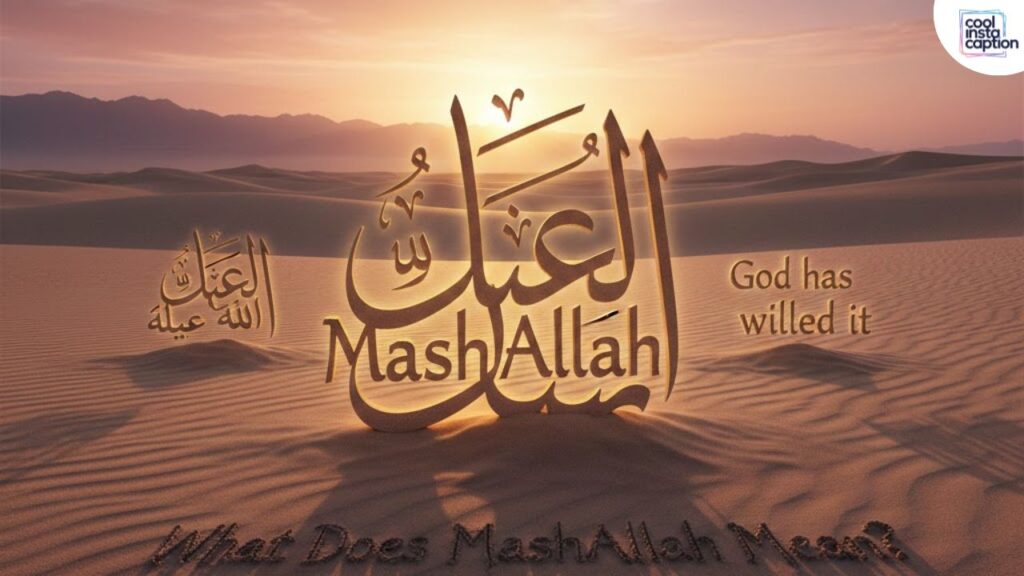
The phrase translates to “what Allah has willed” or “as God intended.” This expression attributes all blessings and beautiful moments directly to Allah’s power and decision.
Key meanings:
- Acknowledgment that nothing happens without divine permission
- Celebration of blessings while maintaining humility
- Recognition of Allah’s creative power
- Defense against negative spiritual energies
- Expression of wonder at Allah’s magnificent creations
What is Mashallah in English?
In English, this phrase means “God has willed it” or “what God wanted has happened.” The translation captures the essence of divine determination behind worldly events.
Common English interpretations:
- “By God’s grace”
- “Allah’s will has manifested”
- “As God intended”
- “Blessed by the Almighty”
- “Through divine permission”
Mashallah Tabarakallah Meaning in Arabic
Mashallah Tabarakallah combines two powerful phrases creating stronger spiritual protection. “Tabarakallah” means “blessed is Allah,” amplifying the acknowledgment of divine blessings.
Combined significance:
- Double layer of spiritual protection from envy
- Enhanced expression of gratitude and awe
- Stronger acknowledgment of Allah’s magnificence
- Commonly used together in compliments
- Reflects deeper religious consciousness
- Emphasizes Allah’s blessed nature and power
| Phrase | Meaning | Combined Effect |
| Mashallah | What Allah willed | Acknowledges blessing |
| Tabarakallah | Blessed is Allah | Magnifies Creator |
| Both Together | Complete blessing formula | Maximum protection |
Example conversation: Person A: “I got promoted!” Person B: “Mashallah Tabarakallah, may Allah continue blessing you!”
Quranic Reference to Mashallah
The Quran mentions this concept in Surah Al-Kahf (18:39), where a man is advised to say “Mashallah” when entering his garden, recognizing Allah’s power.
Quranic context:
- Story of two garden owners illustrates importance
- Acknowledging Allah prevents arrogance and loss
- Divine wisdom in expressing gratitude
- Protection through remembrance of Allah
- Teaching humility despite worldly success
| Surah | Verse | Context |
| Al-Kahf | 18:39 | Garden blessing |
| Message | Attribute success to Allah | Prevention of loss |
| Lesson | Humility over pride | Spiritual protection |
Why Do Muslims Say Mashallah?
Muslims use this expression to maintain spiritual consciousness while celebrating blessings. It serves multiple purposes in Islamic etiquette and daily communication.
Primary reasons:
- Fulfilling Quranic guidance on gratitude
- Protecting loved ones from harm
- Maintaining humble character
- Strengthening community bonds
- Constant remembrance of Allah
Gratitude and Recognition
Saying this phrase expresses thankfulness to Allah for His countless favors. It shifts focus from human effort to divine enablement.
Gratitude aspects:
- Acknowledges Allah as the source of all good
- Prevents taking blessings for granted
- Cultivates contentment and satisfaction
- Encourages positive spiritual mindset
- Strengthens relationship with Creator
- Reminds of dependence on divine mercy
Chat example: Sister: “My daughter memorized 5 new Surahs!” Friend: “Mashallah! Allah has blessed her with such talent.”
Protection from Envy and the Evil Eye
Islamic tradition teaches that envy can cause harm. This phrase acts as spiritual shield protecting blessings from negative energies.
Protection mechanism:
- Acknowledges Allah’s power over creation
- Deflects jealousy through remembrance
- Creates barrier against evil eye
- Invokes divine protection automatically
- Prevents harm through blessed words
- Maintains purity of intention
| Threat | Protection Method | Result |
| Evil Eye | Saying Mashallah | Divine shield |
| Envy | Attributing to Allah | Neutralized negativity |
| Harm | Spiritual consciousness | Blessing preservation |
Politeness and Good Manners
Using this expression demonstrates refined Islamic character. It shows respect, kindness, and consideration when interacting with others.
Etiquette benefits:
- Shows genuine happiness for others’ success
- Avoids appearing jealous or competitive
- Promotes positive social interactions
- Reflects good upbringing and faith
- Creates warm, supportive environments
- Strengthens Muslim brotherhood/sisterhood
Example: Colleague: “I bought a new car!” You: “Mashallah, it looks amazing! May Allah grant you safe travels.”
A Sign of Faith
Regular usage indicates strong Islamic consciousness and sincere belief. It becomes natural expression for practicing Muslims.
Faith indicators:
- Demonstrates internalized Islamic values
- Shows active remembrance of Allah
- Reflects submission to divine will
- Indicates spiritual maturity
- Reveals God-consciousness in daily life
- Strengthens personal connection with Islam
MashAllah vs InshaAllah vs Alhamdulillah
These three phrases serve distinct purposes in Islamic expression. Understanding differences ensures proper usage in appropriate contexts.
Comparison overview:
- Each phrase addresses different aspects of faith
- All acknowledge Allah’s centrality in life
- Proper context determines which to use
- Common in daily Muslim conversations
- Reflect comprehensive Islamic worldview
| Phrase | Meaning | When to Use |
| Mashallah | What Allah willed | Present blessings |
| InshaAllah | If Allah wills | Future plans |
| Alhamdulillah | Praise be to Allah | Gratitude expression |
MashAllah
Used for acknowledging existing blessings and beautiful things already present. It celebrates what Allah has already granted.
Usage scenarios:
- Complimenting someone’s appearance or achievements
- Admiring children, possessions, or talents
- Recognizing beauty in creation
- Celebrating completed accomplishments
- Protecting existing blessings from envy
InshaAllah
Reserved for future events and intentions. It submits upcoming plans to Allah’s will and permission.
Common applications:
- Making promises or commitments
- Discussing future plans and goals
- Expressing hope for outcomes
- Scheduling meetings or events
- Acknowledging uncertainty in human planning
Conversation: Friend: “Will you attend tomorrow’s gathering?” You: “InshaAllah, I’ll be there!”
Alhamdulillah
General praise and gratitude for all circumstances. Muslims say this in both good and challenging times.
When to say:
- After completing tasks successfully
- In response to “How are you?”
- Expressing relief after difficulty
- Celebrating any positive news
- Maintaining gratitude in hardship
Can Non-Muslims Say Mashallah?
Yes, non-Muslims can use this phrase respectfully. It represents beautiful sentiment appreciating divine blessing regardless of religious background.
Considerations:
- Shows respect for Islamic culture
- Expresses genuine appreciation appropriately
- No religious restriction on usage
- Understanding meaning enhances sincerity
- Muslims appreciate respectful adoption
Example: Non-Muslim colleague: “Mashallah, your presentation was excellent!” (Shows cultural awareness and respect)
When Should You Say “Mashallah Tabarakallah”?
Use this combined phrase in situations requiring extra acknowledgment of Allah’s blessings and protection from envy.
Appropriate occasions:
- Seeing exceptional beauty or achievement
- Admiring newborns or young children
- Witnessing remarkable success stories
- Complimenting valuable possessions
- Celebrating significant milestones
| Situation | Why Use It |
| New baby | Extra protection needed |
| Major achievement | Strong acknowledgment |
| Beautiful appearance | Prevent evil eye |
| Valuable acquisition | Double blessing recognition |
How Do You Respond to Mashallah Tabarakallah?
Appropriate responses express gratitude and return blessings. Common replies maintain positive spiritual exchange.
Recommended responses:
- “Alhamdulillah” (Praise be to Allah)
- “JazakAllahu Khayran” (May Allah reward you)
- “Ameen” (Accepting the blessing)
- “Barakallahu feek” (May Allah bless you)
- Simply smile and acknowledge kindly
Response example: Person A: “Mashallah Tabarakallah, beautiful home!” Person B: “Alhamdulillah, may Allah bless you too!”
Mashallah in the Quran
The Quran emphasizes attributing all matters to Allah’s will. Surah Al-Kahf provides direct reference and context.
Quranic guidance:
- Verse 18:39 explicitly mentions saying this phrase
- Context warns against pride and arrogance
- Teaches humility despite worldly success
- Illustrates consequences of neglecting remembrance
- Emphasizes Allah’s ultimate control
Quranic wisdom: The garden owner who said “Mashallah” acknowledged Allah, while his companion faced loss due to pride.
The Importance of Using Mashallah
Regular usage strengthens faith, protects blessings, and enhances community relationships. This simple phrase carries profound spiritual weight.
Overall significance:
- Maintains constant Allah-consciousness
- Protects against spiritual and physical harm
- Fosters gratitude and contentment
- Builds positive Muslim community
- Fulfills Islamic etiquette requirements
Expression of Gratitude
This phrase directs thankfulness toward the true source of all blessings. It prevents attributing success solely to personal effort.
Gratitude benefits:
- Keeps heart connected to Creator
- Prevents arrogance and self-righteousness
- Increases spiritual awareness daily
- Encourages recognition of countless favors
- Develops humble, appreciative character
- Attracts more blessings through thankfulness
Daily practice: Say “Mashallah” when seeing your healthy family, acknowledging Allah’s continuous blessing.
Protection and Humility
The phrase serves as spiritual armor while maintaining modest character. It combines divine protection with personal virtue.
Dual function:
- Guards against evil eye through remembrance
- Prevents pride in achievements
- Maintains balanced perspective on success
- Reminds of human limitations
- Attributes power to rightful Owner
- Creates protective spiritual barrier
| Benefit | How It Works |
| Protection | Invokes Allah’s shield |
| Humility | Credits divine will |
| Balance | Prevents extremes |
Social Harmony
Using this expression promotes positive interactions and reduces jealousy within communities. It creates supportive environment.
Community benefits:
- Encourages celebration of others’ success
- Reduces competitive negative feelings
- Builds trust and goodwill
- Creates culture of mutual support
- Strengthens bonds between Muslims
- Promotes genuine happiness for others
Remembrance of Allah (Dhikr)
Each utterance counts as remembering Allah. It transforms ordinary conversations into acts of worship.
Spiritual reward:
- Continuous remembrance throughout daily activities
- Earns rewards for simple phrases
- Keeps tongue busy with beneficial words
- Increases overall spiritual consciousness
- Makes worship part of natural communication
- Develops habit of constant Allah-awareness
Difference Between Mashallah and Allahumma Barik
Both phrases acknowledge blessings, but “Allahumma Barik” actively asks Allah to bless something or someone.
Key distinctions:
- Mashallah: Acknowledges existing blessing
- Allahumma Barik: Requests continued blessing
- Different grammatical structures
- Complementary rather than contradictory
- Both appropriate for similar situations
| Phrase | Function | Example Usage |
| Mashallah | Recognition | “Mashallah, beautiful child!” |
| Allahumma Barik | Supplication | “Allahumma Barik, may Allah bless!” |
| Combined | Complete blessing | Use both together |
Conversation: “Mashallah, your son is so intelligent! Allahumma Barik, may Allah increase his knowledge.”
The Islamic Perspective on “Mashallah”
Islamic scholars emphasize this phrase as sunnah (prophetic tradition) demonstrating proper faith expression. It reflects comprehensive Islamic worldview.
Scholarly insights:
- Recommended in hadith and Islamic teachings
- Prevents diseases of the heart like envy
- Aligns tongue with heart’s belief
- Demonstrates practical application of Tawheed
- Fulfills rights of Allah in speech
Traditional teaching: The Prophet Muhammad (peace be upon him) taught Muslims to say this phrase when seeing something pleasing, protecting it from harm.
FAQs
What does Mashallah mean in simple words?
Mashallah means “what Allah has willed” or “as God intended,” acknowledging divine blessing and power behind good things.
When should I say Mashallah?
Say Mashallah when seeing something beautiful, admiring achievements, complimenting others, or witnessing blessings to show gratitude and provide protection.
Can I say Mashallah for myself?
Yes, saying Mashallah about your own blessings shows gratitude to Allah and protects against self-pride and evil eye.
Is Mashallah only for Muslims?
No, Mashallah can be said by anyone respectfully. The phrase expresses universal appreciation for divine blessings and goodness.
What’s the difference between Mashallah and Alhamdulillah?
Mashallah acknowledges specific blessings (“what Allah willed”), while Alhamdulillah expresses general praise (“all praise belongs to Allah”).
Conclusion
Mashallah meaning in English encompasses gratitude, protection, and faith acknowledgment in daily life. This powerful Islamic phrase transforms ordinary compliments into blessed recognitions of Allah’s will.
Understanding Mashallah meaning in English enriches spiritual vocabulary and strengthens community bonds. Incorporate this beautiful expression into your conversations, protecting blessings while celebrating divine grace with sincere appreciation and humble hearts.
